Integrated Campaign · Digital Design · Web · Email · Social Media

Get LIT Festival of Books

An integrated digital campaign designed to increase registration, promote an early-registration incentive, and create a consistent festival experience across web, email, display advertising, and social media.

  • Campaign Strategy
  • Web Design
  • Email Design
  • Display Advertising
  • Social Media
Get LIT Festival of Books campaign design

Growing a local festival through a unified digital campaign

Get LIT Festival of Books is a volunteer-run weekend event in Boulder, Colorado, created to promote community literacy, local authors, publishers, bookstores, and educational programming.

For this academic project, I developed an integrated campaign for the festival’s third annual event. The campaign promoted the May 17–19 festival and encouraged attendees to register by April 30 for an opportunity to win a sponsored book basket and meet the keynote author.
Create more visibility without losing the community focus.

Campaign goals

  • Increase festival registration
  • Promote the early-registration raffle
  • Reach audiences beyond existing social followers
  • Attract future volunteers and sponsors
  • Communicate the variety of festival programming
  • Create consistency across digital channels

Audience

The campaign needed to speak to several groups within the literary community, including readers, families, authors, educators, publishing professionals, and potential volunteers and sponsors.

Although their individual goals differed, they shared an interest in literacy, books, education, discovering authors, and participating in community events.

Building the campaign from strategy through presentation

01

Research

Reviewed the client brief, campaign goals, audience personas, brand requirements, and previous festival campaign.

02

Strategy

Established communication priorities, visual direction, information hierarchy, and registration calls to action.

03

Design

Adapted the visual system across landing-page, web hero, email, display advertising, and social-media formats.

04

Presentation

Organized the final campaign into a stakeholder presentation explaining the strategy and completed deliverables.

Three messages needed to remain clear everywhere.

01

Establish the festival

Keep the Get LIT identity and open-book/lightbulb logo immediately recognizable.

02

Make the dates visible

May 17–19 needed to remain one of the most prominent pieces of information.

03

Drive registration

April 30 and “Register Today!” became recurring campaign elements across every format.

Books, learning, discovery, and community

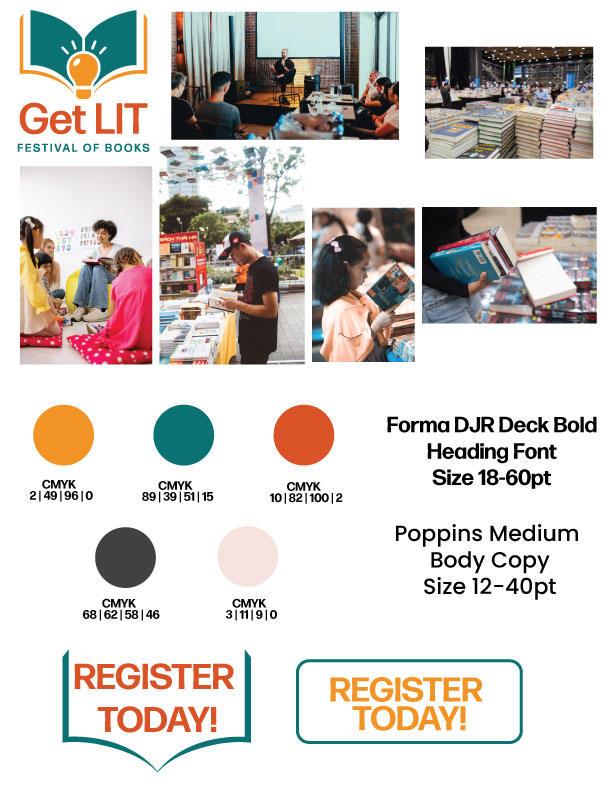
I created a mood board using festival, author, educational, and reading imagery to represent the range of experiences available at the event.

Get LIT campaign mood board showing colors, typography, imagery, logo, and calls to action

Color

Teal anchors the identity while gold and flame orange emphasize dates and important information. Dark gray provides contrast and light pink adds a softer supporting tone.

Typography

Forma DJR Deck creates strong campaign headlines, while Poppins supports readable body copy across web, advertising, and promotional formats.

Imagery

Festival and reading photography represents authors, educators, families, speakers, readers, and the wider literary community.

Extending the campaign into a complete digital experience

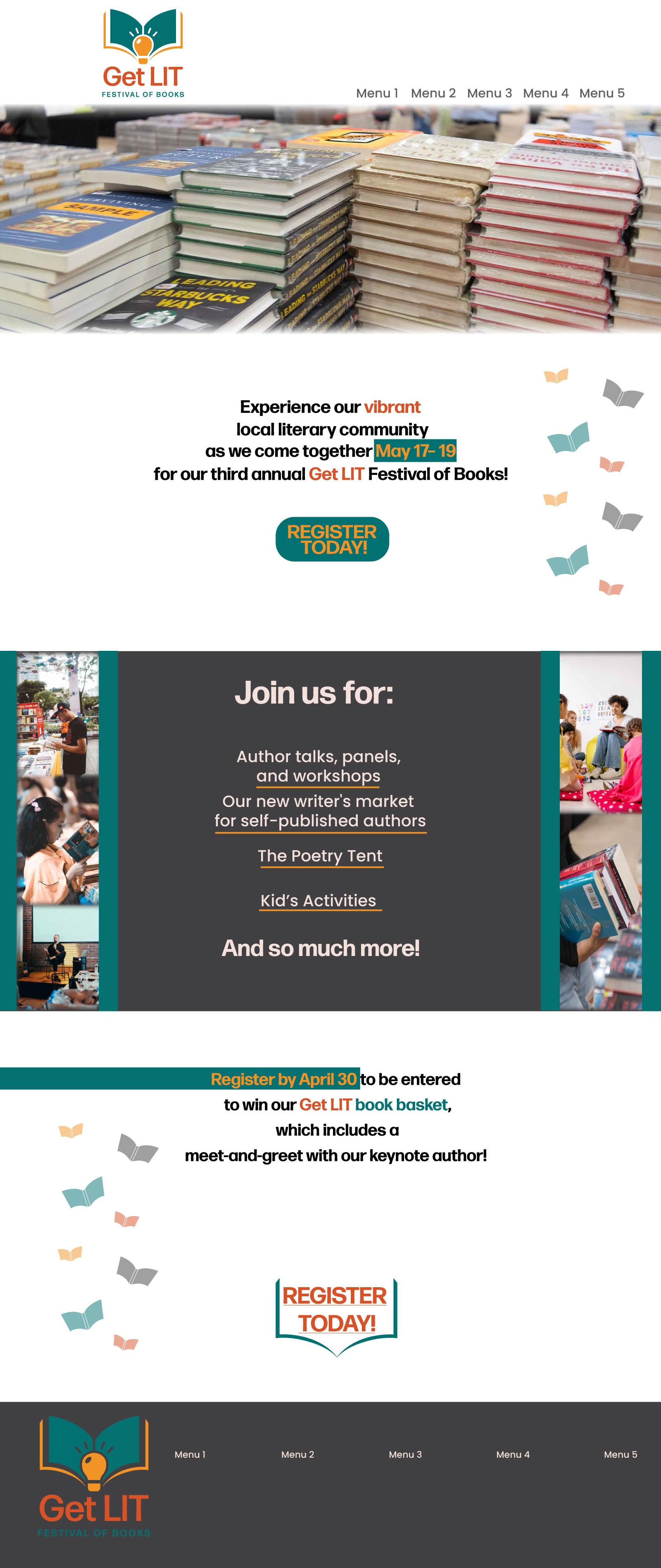
The landing-page concept introduces the festival with a large book-focused hero image, presents the event dates and campaign message, summarizes available programming, promotes the registration incentive, and finishes with another registration opportunity.

Photography along both sides of the programming section represents the range of festival audiences, while small book illustrations reinforce the literary theme and help guide viewers down the page.

Full Get LIT Festival of Books landing page design

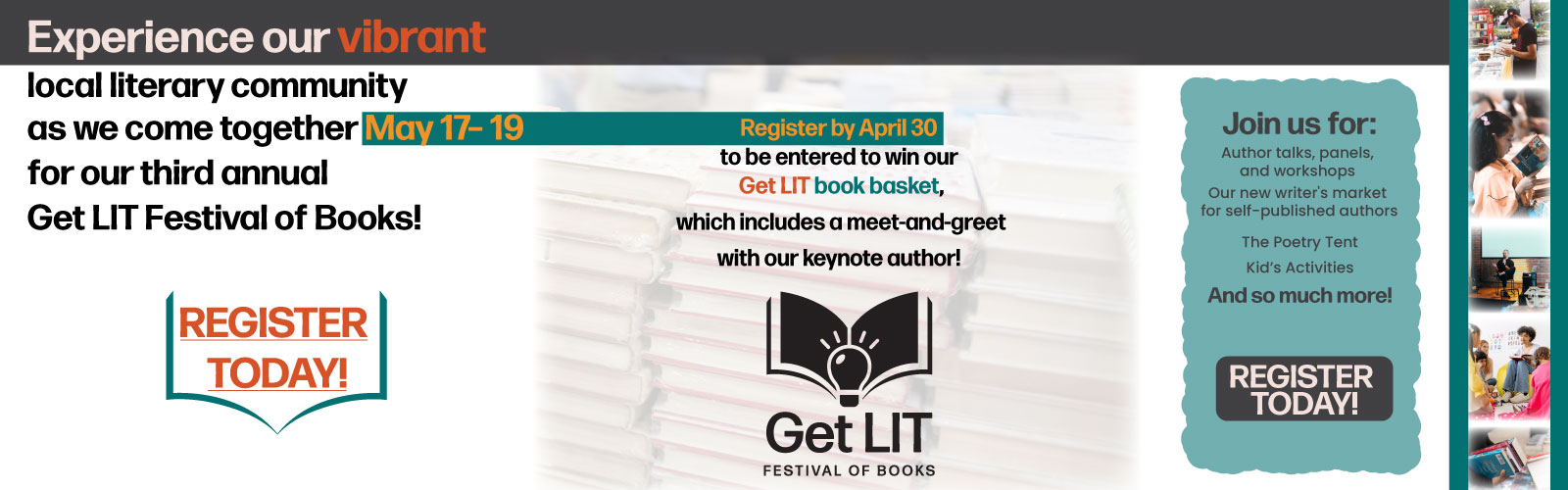
The complete message in one horizontal composition

The 1600 × 500 treatment condenses the festival identity, dates, registration incentive, programming, imagery, and call to action into one highly visible website area.

Get LIT Festival website hero banner
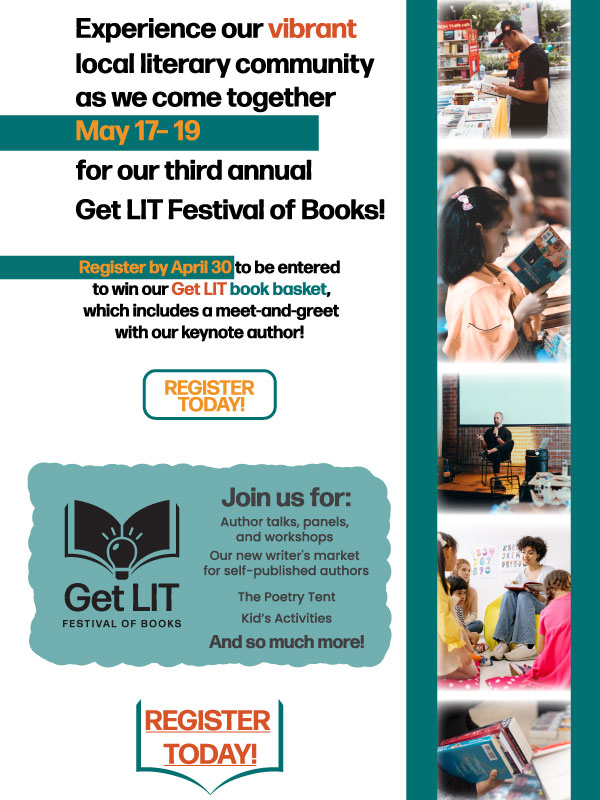
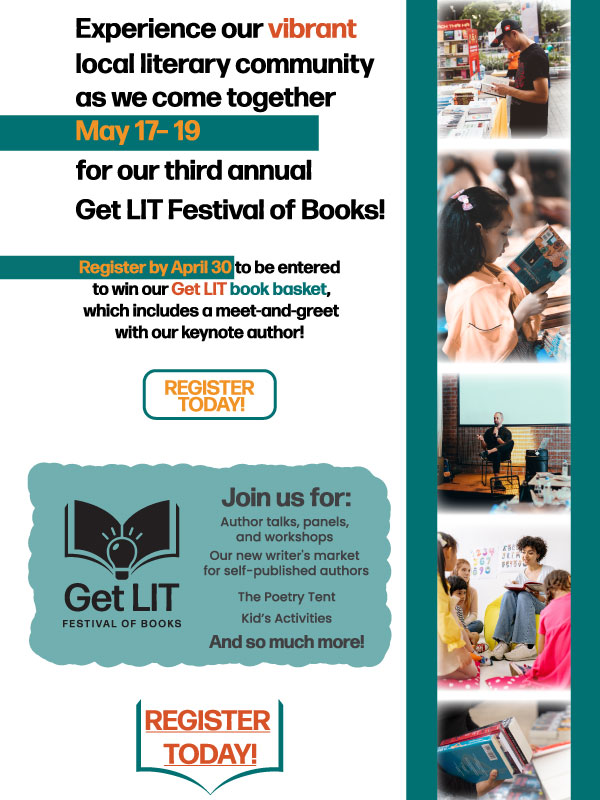
Get LIT Festival promotional email design

A longer message for an engaged audience

The email campaign uses a single-column content area supported by a vertical strip of festival imagery.

The design introduces the event, highlights the May dates and April registration deadline, explains the prize incentive, summarizes festival activities, and provides multiple registration opportunities.

Adapting the same campaign to radically different proportions

728 × 90

Leaderboard banner

The horizontal banner reduces the campaign to its essentials: festival identity, event dates, registration deadline, book-basket incentive, and CTA.

Get LIT leaderboard display advertisement

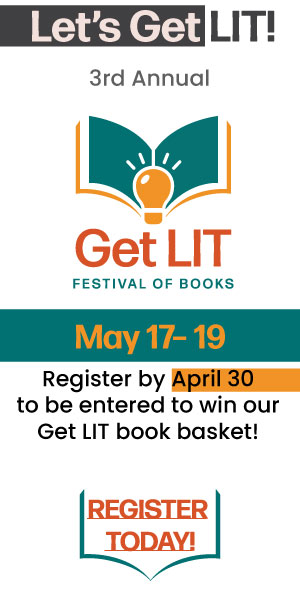
300 × 600

Large skyscraper

The skyscraper uses a vertical reading hierarchy, beginning with the campaign headline and festival identity before leading into dates, incentive, and registration.

Get LIT large skyscraper display advertisement

Fast visual communication for social audiences

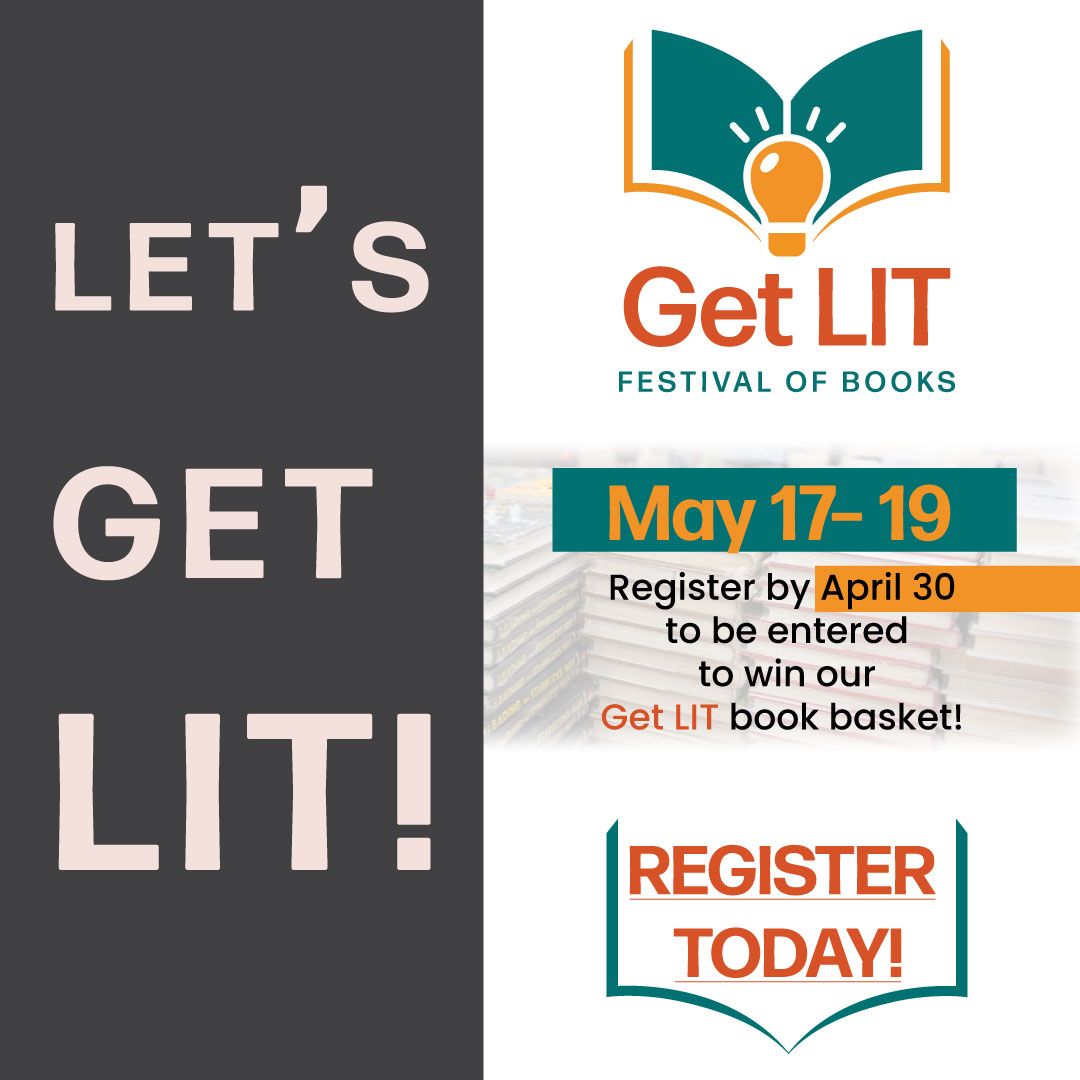
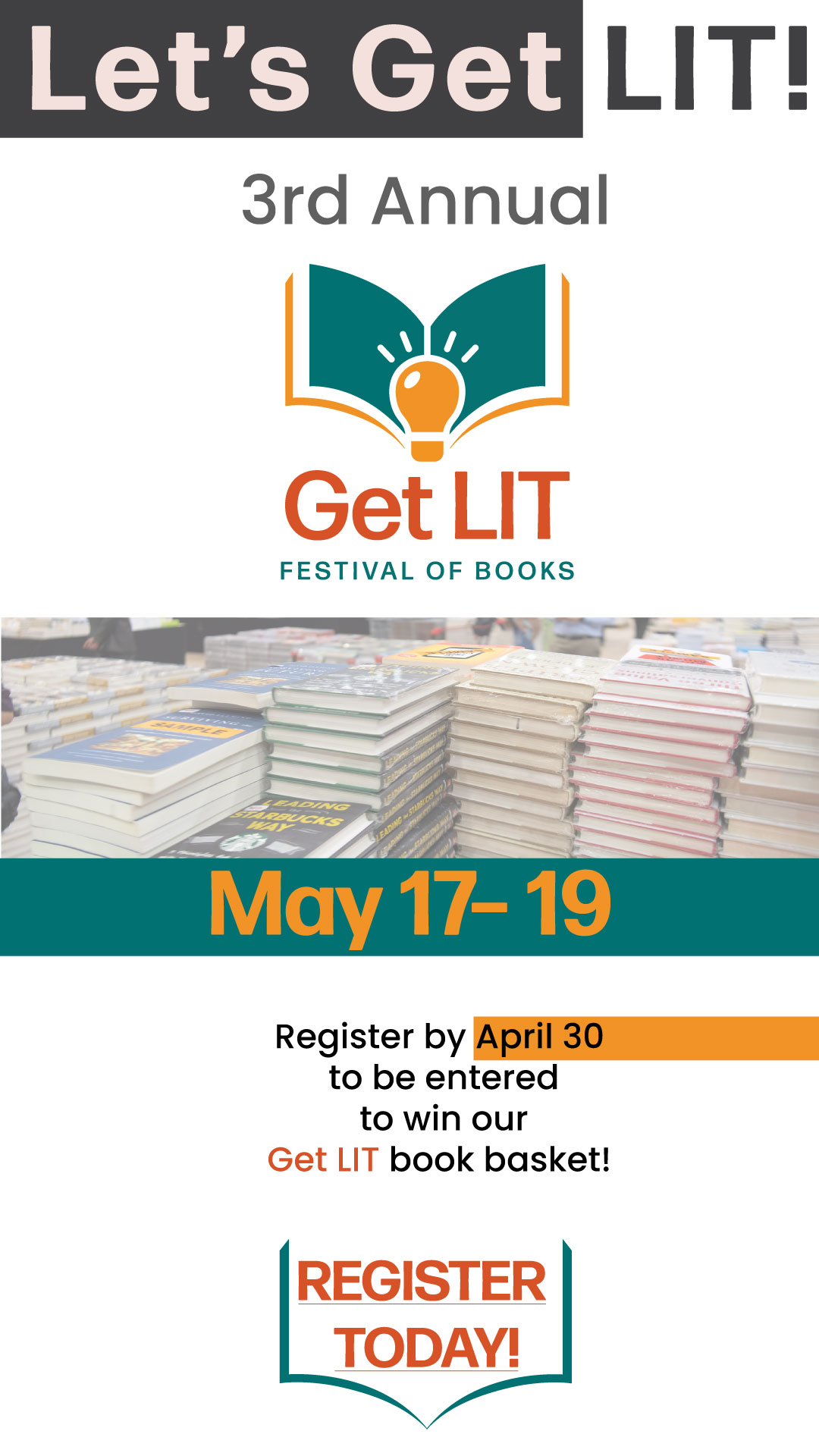
Both social formats retain the festival identity, dates, raffle incentive, and registration message while adapting the reading sequence to their dimensions.

Square Get LIT social media advertisement
Square social advertisement · 1080 × 1080
Vertical Get LIT social media story
Social story · 1080 × 1920

Presenting the campaign as a complete system

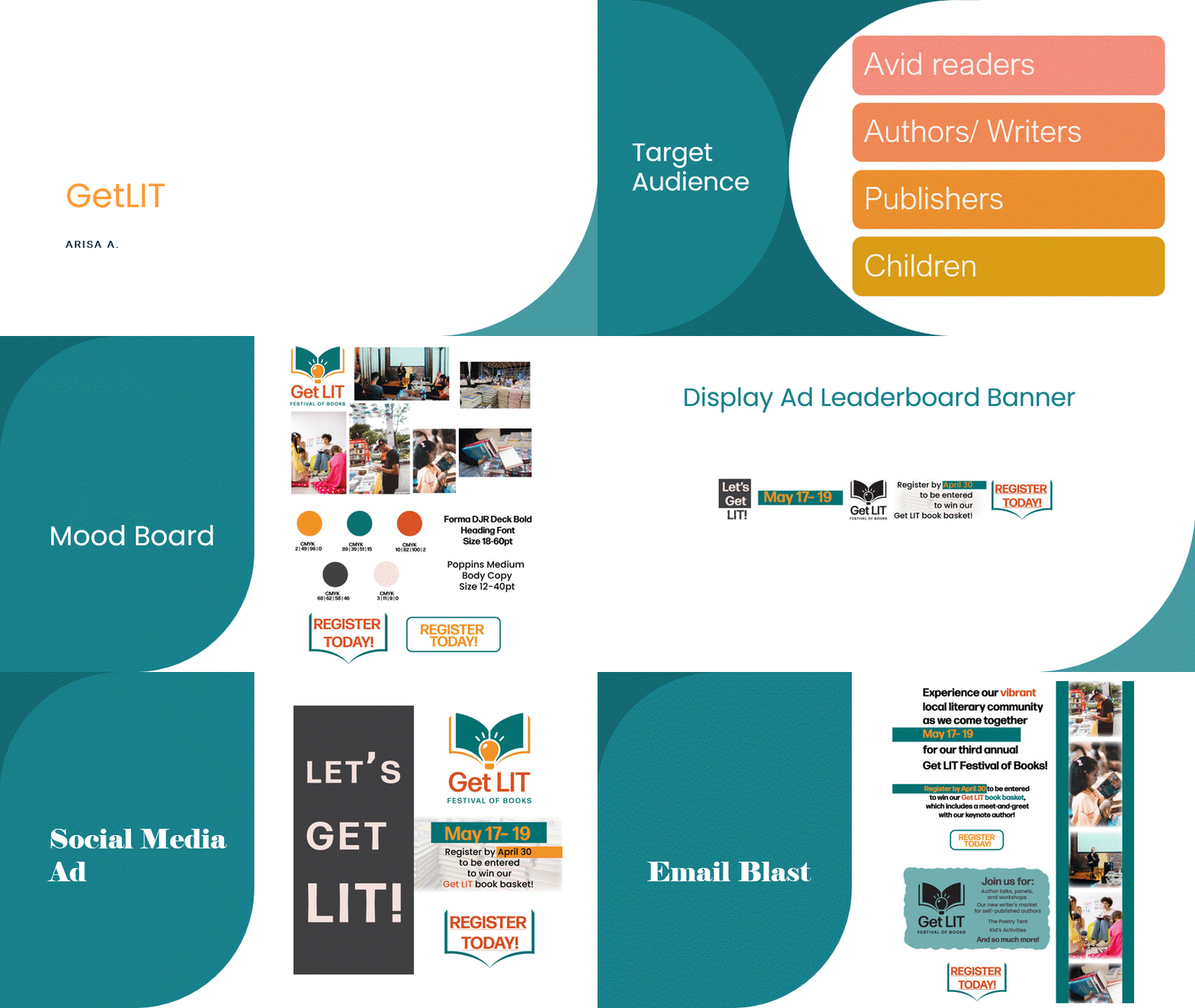
The final stakeholder presentation brought the visual direction, campaign strategy, and completed deliverables together so the work could be reviewed as one integrated campaign.

Animated Get LIT stakeholder campaign presentation

One campaign identity across every digital touchpoint

The completed campaign creates a unified experience across landing-page, website hero, email, display advertising, and social-media formats.

Repeated use of the Get LIT identity, colors, typography, photography, highlighted dates, and registration language makes each deliverable recognizable as part of the same system while allowing the individual layouts to respond to very different dimensions.

Designing systems instead of isolated pieces

  • Adapt information hierarchy to different dimensions
  • Balance consistency with format-specific layouts
  • Use audience needs to guide image selection
  • Reduce content for small advertisements
  • Expand messaging for web and email experiences
  • Present design decisions to stakeholders

Explore another project

See how visual strategy changes across different experiences.

View Art Talk